
ReWeavers: views from those making it happen
A regular Q&A feature of invited guests who bring inspiration, insight and experience across the diverse range of expertise needed to bring forgotten assets back to life. If you would like to take part drop me a line.

3# ReWeaver: Matt Cartwright @ Twelve Architects
Matt Cartwright is the Founding Director of Twelve Architects, a London-based practice recognised for creating memorable and distinctive designs across multiple sectors. The practice has a unique portfolio of work, combining creativity, technical expertise and a collaborative approach to turn ambitious ideas into successful built projects. Matt enjoys challenging conventional thinking to find unexpected solutions, particularly when working with complex sites and existing buildings. He sees the design process as inherently collaborative, bringing clients, consultants and wider project teams into the conversation to develop a shared vision and make the most of what a project can become. At the heart of his approach is a belief that architecture should leave a lasting impact on the people and places that experience it. For Matt, that means creating projects that are imaginative and distinctive, but also useful, relevant and capable of evolving with the needs of their surroundings.
What is your favourite ReWeave project and what makes it special?
We have had the great pleasure of working on Castlefield Viaduct from the very beginning, a project which continues to grow and evolve. The project is a great example of looking at a place through the lens of past, present and future. Rather than simply preserving the structure, the project has given it new life and a new function as a community space. It has enriched Manchester in so many ways, creating opportunities for wellbeing, education, biodiversity, community and culture. The transformation reclaims the viaduct’s place in the city, celebrating its part in Manchester’s past, present and future.
Another project that is very close to my heart is the Bodmin Jail Hotel. Originally built in 1779 and later left in a state of disrepair, we took on the ambitious challenge of transforming a derelict building without a roof, into a boutique hotel and visitor attraction. Our ambition was to preserve the aesthetic qualities and character of the ruin, rather than restoring the building back to its original appearance, allowing visitors to experience its story. Each guestroom retains existing cell layouts, as well as original barred windows and stone walls. As a nod to the principles of the original roof (which was lost to several demolition attempts), a contemporary skylight was fitted, flooding the atria with natural light and enhancing the beauty of the ruin.
For me, what makes both projects special is that they recognise that buildings and places have the ability to evolve. Adaptive reuse can preserve what is meaningful about a place whilst giving it a new purpose, allowing its stories to continue to be experienced by future generations.
What is a big challenge for ReWeave projects?
It goes without saying that historic buildings come with surprises, liabilities, constraints and imperfections, which of course, can present a number of complex challenges once you start working with them. What makes these types of projects successful is being able to embrace these complexities, using them to unlock the potential of an existing building. The challenge is that ReWeave projects require a willingness to work with uncertainty and an ability to adapt as challenges emerge. This also requires clients and project teams to be willing to take on a degree of risk and to share the same level of ambition. Trust is fundamental – there needs to be confidence that when challenges arise, they will be worked through collectively rather than becoming barriers to progress.
What is the most important element to make a ReWeave project a success?
A shared vision and a strong, collaborative team are fundamental. ReWeave projects can be complex and involve many different interests, so having a clear understanding of what the project is trying to achieve provides an important foundation for making decisions along the way. That vision needs to be grounded in a genuine understanding of the existing place, its history, character, constraints and potential, whilst also being ambitious about what it could become. From there, success depends on bringing the right people together and creating an environment where everyone can contribute their expertise. The best outcomes come when clients, consultants, contractors and other stakeholders are aligned around a common ambition and are willing to work through challenges together.
Looking ahead, what systemic changes would you like to see to support ReWeave projects?
There is clearly a growing appetite for reuse and retrofit; the challenge now is creating the conditions that allow this ambition to translate into more projects being delivered. This could be supported by more flexible approaches to funding, procurement and risk. Financial models could also recognise the longer-term value of retaining existing buildings rather than assessing projects primarily on the basis of initial capital cost. Planning could also play a role by making it easier to adapt existing buildings where proposed changes support their long-term viability, giving clients greater confidence to take on the challenges that come with reuse. Ultimately, the aim should be to make reuse a credible first option, with the information, procurement routes, funding structures and planning framework needed to properly understand the opportunities and manage the risks. This would give clients, investors and delivery teams greater confidence to take these projects on.
What bit of advice, future insight or reflection would you pass on to someone leading a ReWeave project?
Have a clear vision but be prepared to adapt. Existing buildings will always reveal something unexpected, and those discoveries can become opportunities rather than problems. Being able to communicate the vision clearly, whilst remaining open and agile, helps build the trust and support needed to take people with you. Engage early and meaningfully with communities, authorities and stakeholders. Bringing people into the process from the outset can strengthen the brief, build ownership and help navigate the complex planning and heritage challenges that often come with such projects. And most importantly, have fun with it! There is real joy in discovering the stories held within existing buildings and finding new ways to bring those stories to life. ReWeave gives us the opportunity to give these places a future, whilst allowing generations to come an opportunity to experience, understand and connect with their history.
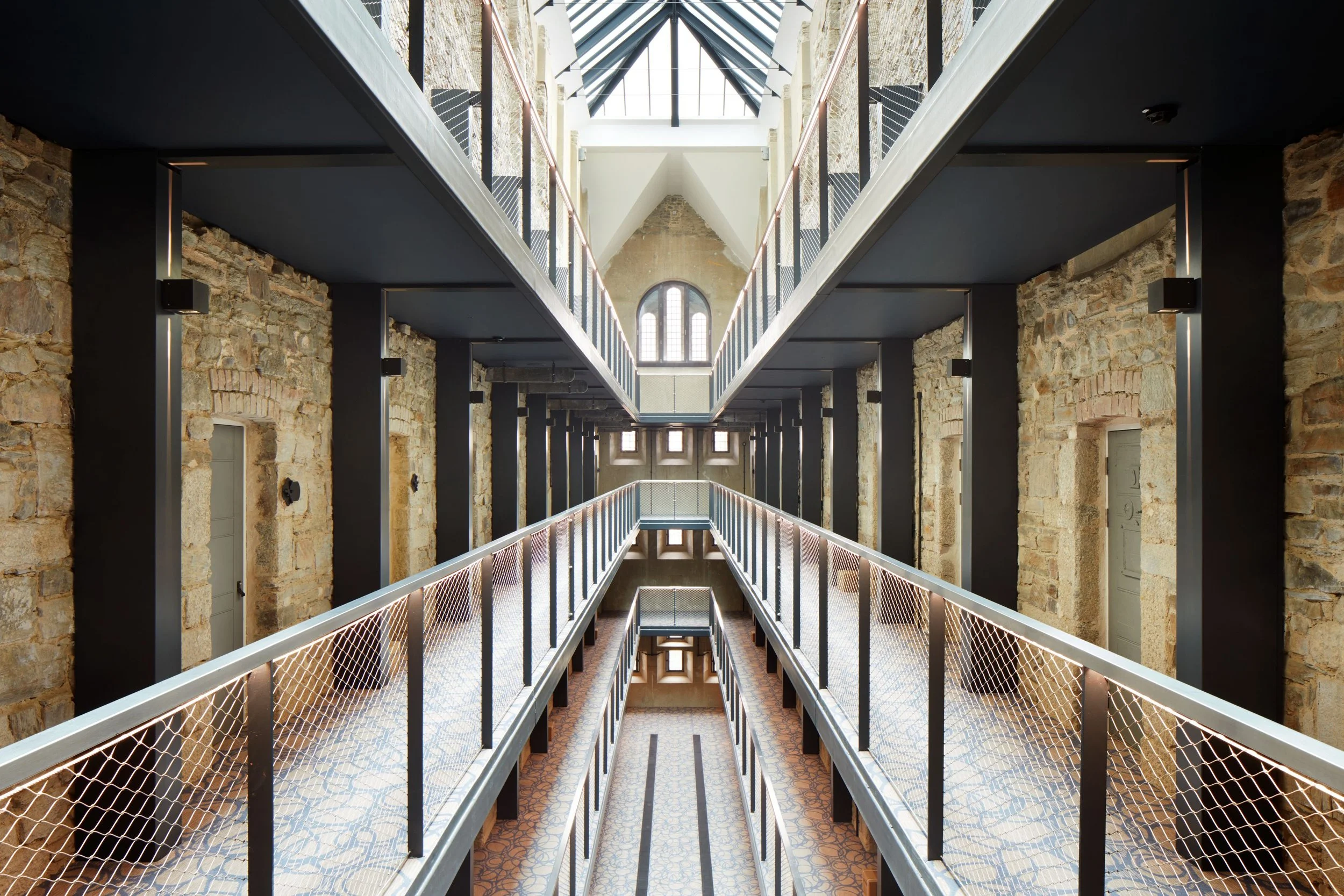
Bodmin Jail Hotel