
News Round Up #3
A fortnightly look at headlines from the world of adaptive reuse. SUBSCRIBE for a monthly newsletter to your inbox.
1. UK News
Heritage and Social Infrastructure
A compelling report by the Joseph Rowntree Foundation (JRF) summarising the power (and need) for social and community infrastructure within a place - a massive opportunity for ReWoven places to play a role in my opinion.
Heritage Role in Welsh jobs, Economy and Communities
A report highlighting that the historic environment in Wales supports nearly 18,000 jobs and contributes more than £738million to the nation’s economy every year.
Repurposing Historic Buildings for Homes
A report by PJ Livesey that explores the role that historic buildings can play in meeting the UK’s housing needs while conserving the nation’s built heritage.
Slightly older report produced in 2025 but worth a read if you haven’t seen it highlighting the opportunity to create over 670,000 new homes by repurposing heritage buildings and assets.
Funding for Green Infrastructure
A page dedicated to UK funding opportunities for projects with a green infrastructure and nature element hosted by the Green Infrastructure Partnership.
Proactive Prep for Funding and Investment
A great article by Diane Cunningham of the Assembly Line with tips on being on the front foot ahead of re-use funding and investment opportunities landing - proactivity pays dividends.
Scotland’s Abandoned Buildings
Article by The Ferret highlighting the challenges presented by derelict buildings across Scotland and the need for a more proactive approach.
Ladywell Playtower Design Finalists
Public views are being sought on four concept proposals for reuse of the Grade II-listed Ladywell Playtower.
2. Global News
Helen Hamlyn Award - Funding Opportunity
The inaugural Helen Hamlyn Award will grant £25,000 to an International National Trusts (INTO) member in support of a project that will breathe new life into a heritage space. Expressions of interest to be submitted via this page with a deadline of 6th November
Global Threats to Heritage Report
World Monuments Fund (WMF) today released its latest insights and analysis in a report identifying funding shortages, the intensifying impact of climate change, and a loss of specialized skills as key global threats to heritage.
3. Additions to the Inspiration Map
From Boxing Gloves to Care Gloves
The former tannery Baily’s Building in Glastonbury, which made gloves for world famous boxer Muhammad Ali in its heyday, has welcomed its first workers in nearly 50 years.
News items to submit? Please pop me a line.
Spotlight: Sustainable Models for ReWeave Projects

Like trees, money doesn’t grow on 16th century Tudor facades.
An obvious fact that highlights the joint challenge faced by those investing in environment and heritage assets – how do you receive a financial return to at least break even?
The challenge is further compounded by the oft money devouring nature of these assets, both initial capital improvements under the shadow of ‘conservation deficit’ and then ongoing maintenance, operation and regulatory compliance costs. They all mount up, even more so when you add public access and societal benefit to the mix.
There are increasing opportunities in the environment sector for securing income via ecosystem services. These usually require a minimum scale to generate sufficient income and there can be a tension between land for eco services versus land for human access.
Some nature organisations are also leaning into commercial entrepreneurship including the Green Estate in Sheffield with their ground breaking pictorial meadows and the diverse income stream model of the Wendling Beck | Nature Recovery Project, Norfolk.
On the heritage side, the typical income solution has been the visitor model. Organisations such as the National Trust, English Heritage and Historic Palaces have successful and sustainable models, breaking even and generating a surplus to invest in further charitable endeavours.
The heritage sector is a lot tougher for small organisations without the benefit of a large portfolio of accessible assets, broad brand profile or a large supporter base. Single asset organisations face massive challenges of making the scales of benefit and cost balance, often on a weekly basis.
Recently, a great model has been offered up by the Architectural Heritage Fund (AHF) in the form of their Heritage Development Trust (HDT) programme.
A HDT is defined as a charity or social enterprise that acquires and repurposes vacant or ‘at risk’ historic buildings, turning them into assets for the benefit of local communities. Sweating the assets to make them used and useful alongside protecting the historic fabric.
Critical to the approach is seeking to commercially manage a portfolio of assets with different functions and the ability to cross-subsidise and phase delivery. Although increased scale raises risks, there is benefit in achieving a critical mass of diverse assets that creates resilience in terms of offer, income stream and audience. It’s great to see several HDTs pop up all over the UK.
Another useful mechanism recently proposed by the National Trust is a Safe Harbour Scheme. The scheme aims to provide an organisation with an interest in taking on a new heritage ReWeave project some initial breathing room to figure out a viable future use. This would comprise a three year period of support, funding, critical capital works and advice to test and explore different options free from distractions of existential fire fighting.
In the US, several ReWeave projects have successfully commercialised elements within their core operating models to support sustainability, including the NY Highline and Dequindre Cut that can be found on the Inspiration map.
In summary there are three key takeaways:
Diversification and scaling of asset portfolios increases risk but also increases opportunity
Entrepreneurship and diversifying income streams provides resilience to complement grants and donations
Early phase support is critical to giving ReWeave projects a real chance of success
News Round Up #2
A fortnightly look at headlines from the world of adaptive reuse. SUBSCRIBE for a monthly newsletter to your inbox.
1. UK News
How can we measure the economic and social benefits of heritage?
Heritage projects generate a wide range of benefits, but capturing their full value for people and places can be a challenge. The Heritage Fund UK commissioned Simetrica-Jacobs to develop and test an approach to valuing the benefits for the economy and for society. You can read the report HERE
The Social Value Need Index
The Social Value Need Index is a free and open-source tool developed by WPI Strategy on behalf of the Social Value Commission. The tool allows users to select one or more local authorities, combined authorities or regions to understand the social value need of an area. A useful tool to help support the case for adaptive re-use investment in areas of high need.
Funding available
Historic England have up to 21 grants of up to £15,000 available that could be used to support ReWeave projects. Deadline for applications closes on November 27th.
A range of funding opportunities offered through the fab Architectural Heritage Fund.
A new era for community ownership?
An insightful report by Power to Change and Locality about the future challenges and opportunities around community ownership.
Heritage led regeneration
The Heritage Network are running a great event in Perth and Kinross with a focus on a scheme and grant programme to re-use vacant buildings.
2. Global News
The High Line: The Public Above and Below the Viaduct
An interesting article by Federica Leone examining the impact of the famous New York Highline and the challenges of gentrification versus community benefit. If interested in the Highline you can still find a second hand copy of the founders book if you look online.
Guess how many buildings there are on Earth?
2,750,000,000. As estimated by researchers at the Technical University of Munich have mapped them in the GlobalBuildingAtlas: the first open dataset to provide global coverage of individual building footprints, heights and simple 3D models.
🔗 Tutorial → https://lnkd.in/e3sDKk8V
🔗 Research paper → https://lnkd.in/ehsVVUVn
🔗 Explore the project → https://lnkd.in/e68apFGY
🔗 Code and data → https://lnkd.in/exi9Wki2
News items to submit? Please pop me a line.
Spotlight: More Than A to B
Back in the 60s and 70s, the UK city scape was shaped in part by the construction of sprawling, multi layered concrete road and highway infrastructure, codified in the infamous 1963 Traffic in Towns - The Buchanan Report. Large multi lane highways, overpasses, underpasses, roundabouts and precast bridges all hewn out of grey concrete became ubiquitous and intrusive in urban centres. The Buchanan approach very much favoured function over form, creating hulking road capacity as a priority to cater for the massive boom in private car ownership, often at the expense of surrounding people and place.
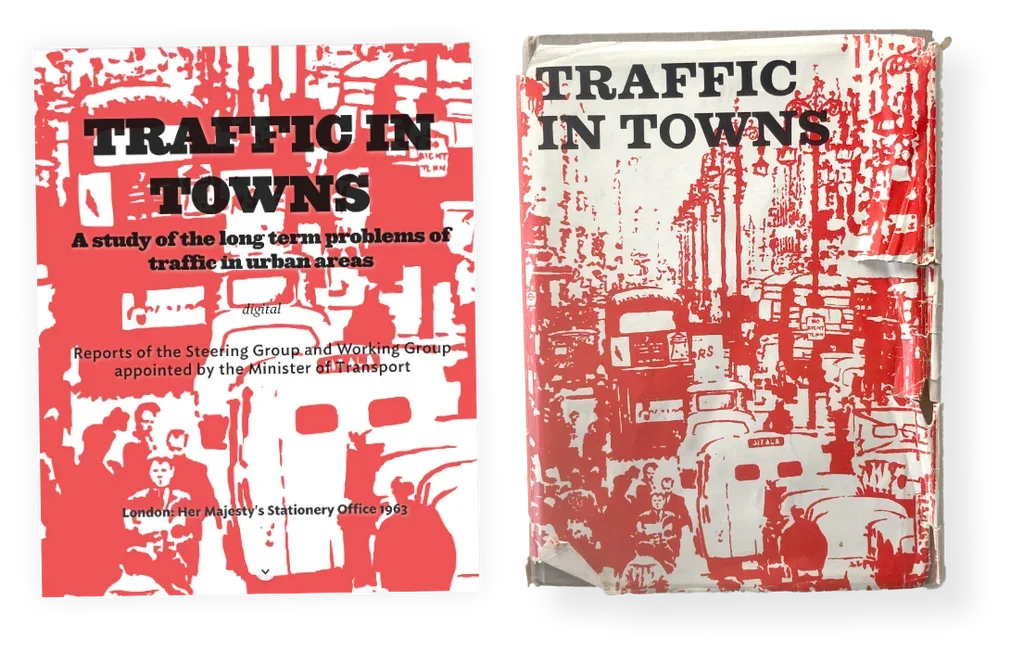
Recently, the approach to transport design has evolved. Increasingly, new transport infrastructure is seen as an opportunity for place making and amenity beyond travelling from A to B. Opportunities are greatest for walking and cycling given the slower pace and direct connection of the traveller with the physical environment. The Walk Wheel Cycle Trust have been doing some great thinking in this space as well as charities such as Living Streets.
Likewise, there are a host of adaptive re-use projects that are reimagining unloved assets and transport infrastructure and with place making, amenity and movement benefits in mind. By diversifying functions and stacking benefits projects are often more resilient and responsive to change and can access a wider range of funding and investment opportunities, therefore supporting long term sustainability.
Check out a few relevant case studies below and explore more on the Inspiration map:
1. New York Highline, New York, USA
The West Side Elevated Line was built in 1933 for trains that carried millions of tons of meat, dairy and produce every year between buildings in New York City. Following decline in the latter part of the 20th Century the highline was at risk of demolition. Fortunately, in 2003 the Friends of the Highline group started a campaign the ultimately has seen the High Line rejuvenated into a 1.45 mile long greenway and world-renowned destination.
2. The Rail Park, Philadelphia, USA
The Reading Viaduct opened in 1893 in the Callowhill district of Philadelphia, Pennsylvania supporting industrial growth in the city until closure in the 1980s. In 2010, a new community organization, Friends of the Rail Park, began to evaluate options to convert the abandoned viaduct into an elevated park and greenway. Phase 1 of the park successfully opened in 2018 and there is an ambitious vision to extend the initiative to connect communities along a 3 mile stretch.
3. Bennerley Viaduct, Derbyshire, UK
Bennerley Viaduct is a former Victorian railway viaduct built in 1878 spanning 433m. It closed to trains in the 1960s and then suffered a period of structural decline. Fortunately, a local community group - The Friends of Bennerley Viaduct - campaigned and successfully fundraised to secure a future for the ‘Iron Giant’. The viaduct opened to the public as part of a cycling and walking route and a destination with visitor facilities and nature improvements in January 2022.
4. Castlefield Viaduct, Manchester, UK
Derelict since the 1960s, the 330m Castlefield Viaduct was transformed into a ‘Sky Park’ by the National Trust in partnership with the local community and the Historic Railways Estate. Currently the park is a dead end but the future vision seeks to extend the project with a 1km through route connecting communities in Greater Manchester as part of the broader Cyan Lines initiative.
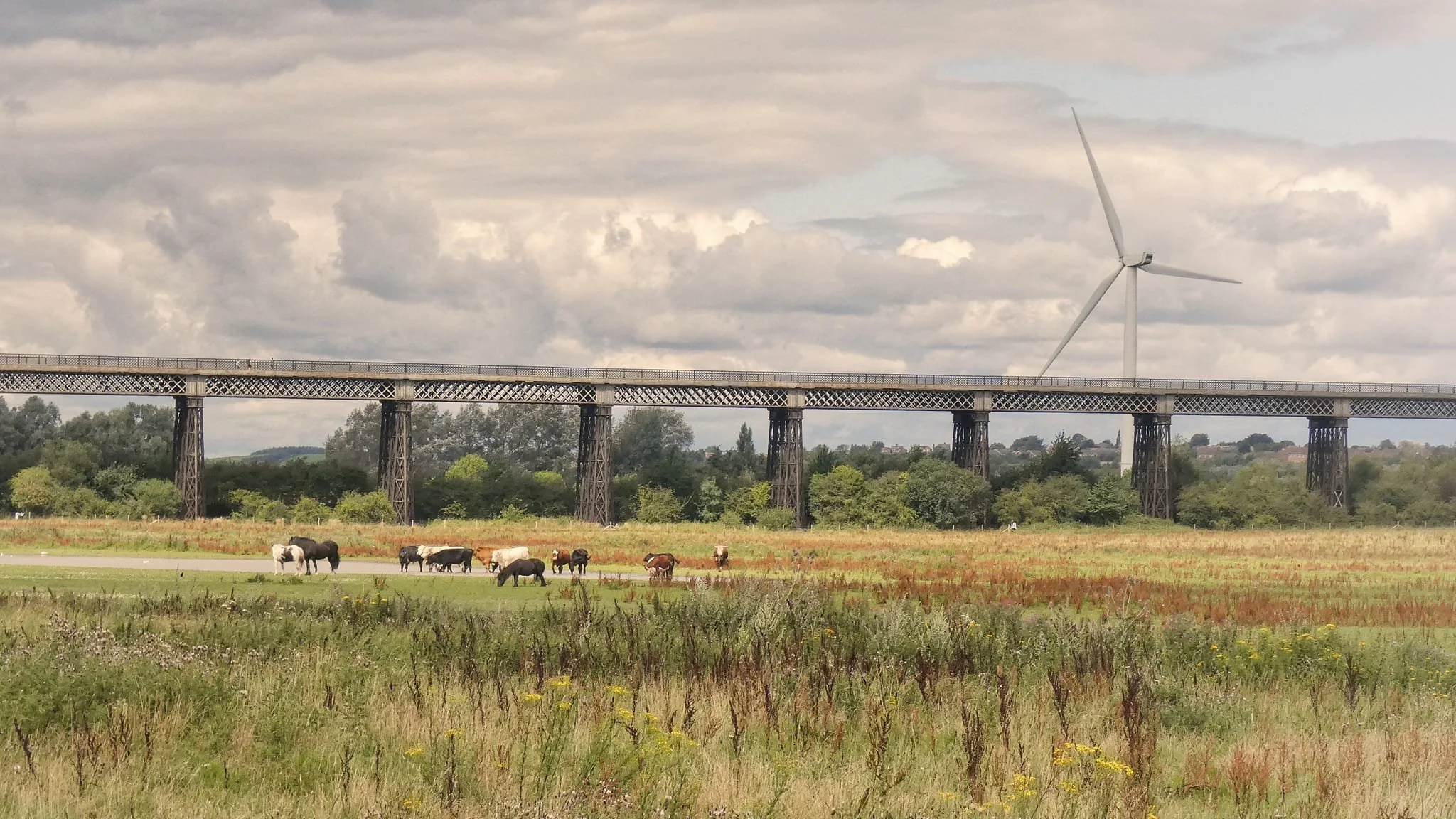
Bennerley Viaduct
News Round Up #1
A fortnightly look at headlines from the world of adaptive reuse. Subscribe for a monthly newsletter to your inbox.
1. UK News
‘We’ll invest £1.4billion in heritage and communities over the next three years’
The Heritage Fund UK has released its new delivery plan for 2026-2029 outlining the next steps to achieving an ambitious 10-year vision for the UK’s heritage.
The Architectural Heritage Fund (AHF) has shared its sixth annual Impact Report
Building on the Evaluation Framework introduced in 2024, the new Report details the Outcomes and Impacts of the AHF’s work over the past year, demonstrating the difference they are making for heritage-regeneration projects and communities across the UK. Read the 2025/26 Report HERE
Holbeck Viaduct feasibility study ready to progress
The Railway Heritage Trust has awarded a grant towards a feasibility study to progress the community led Holbeck Viaduct greenway project in Leeds, UK.
Green and Blue Infrastructure Design Guidance, Walk Wheel Cycle Trust (WWCT)
New guidance from the WWCT that provides guidance for designers to help grasp the opportunity to integrate blue and green infrastructure within active travel networks.
Historic England, Heritage Investment Prospectus
The Heritage Investment Prospectus showcases historic sites and buildings across England where owners are actively seeking investment partners or buyers right now. Check out the 2026 prospectus
2. Global News
The Bentway (Toronto) - A new report outlining the positive role public space can play in combating loneliness?
What role can public space design and programming play in fostering connection and combating loneliness? A new report released by The Bentway with partners Gehl (New York) and researchers from the Dalla Lana School of Public Health (U of T) reveals the essential role public spaces play in fostering mental health and social connections - and benefit. Great work.
Re-use Italy are running two competitions on the reimagining of two iconic Italian buildings:
The Convent - Among the mountains of Abruzzo, in central Italy, lie the ruins of the Convent of Santa Maria di Cartignano. Over 1,000 years old the community are looking for a new use.
The Theatre - The Roman Theatre of Falerio Picenus, Falerone, rises on the flat alluvial plains of central Marche, along the left bank of the Tenna river. Can the theatre be brought back into use whilst respecting the historic fabric?
News items to submit? Please pop me a line.
-
October 2026
- 15 Oct 2026 News Round Up #3 15 Oct 2026
- 7 Oct 2026 Spotlight: Sustainable Models for ReWeave Projects 7 Oct 2026
- 1 Oct 2026 News Round Up #2 1 Oct 2026
-
September 2026
- 23 Sept 2026 Spotlight: More Than A to B 23 Sept 2026
- 17 Sept 2026 News Round Up #1 17 Sept 2026
- 7 Sept 2026 Welcome 7 Sept 2026
News Archive