1# ReWeaver: Duncan Laird @ ReWovenPlaces.Org
What is your favourite ReWeave project and what makes it special?
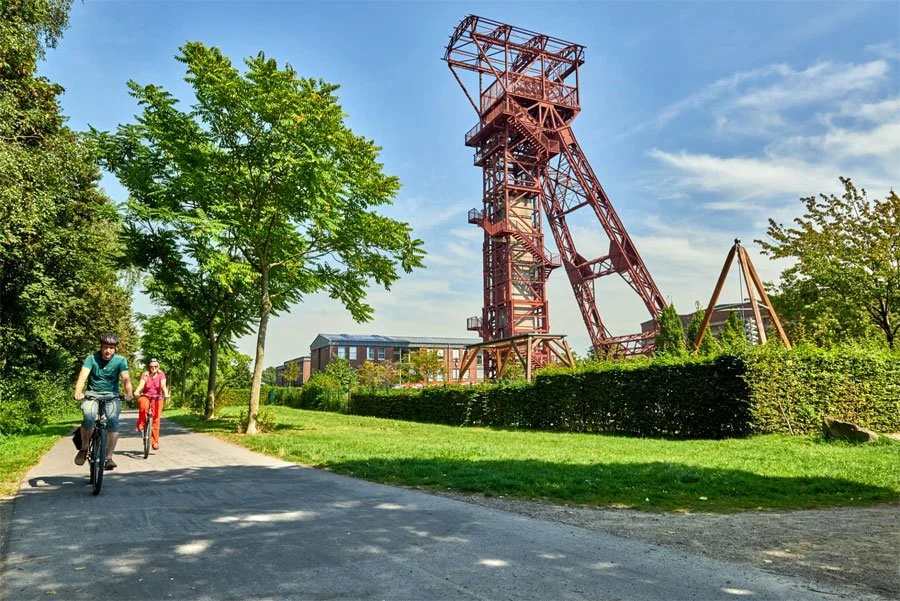
Crikey, this is a tough one to narrow down. From a personal perspective I’m very fond of Castlefield Viaduct Sky Park as I played a leadership role in making it happen with the National Trust. The project is a great blend of nature, history and culture and has community and partnerships at its very core. A core intent was to create a platform for others to activate in a safe way, this enabled smaller organisations and community groups to have a voice and presence on the viaduct. At an international level the Landschaftspark Duisburg-Nord in Germany is very special. A massive public park built around a disused ironworks, combining rusting mine infrastructure with walking and cycling trails, an alpine climbing garden, and a giant artificial diving tank. A project that again does a superb job of blending history, nature, culture and community delivering public and environmental benefit.
What is the biggest challenge for ReWeave projects?
The biggest challenge for me is that most projects have front loaded risk that needs to be owned and addressed before any real progress can be made. If you acquire an unloved asset or place you also acquire the liabilities and need to ensure the asset is safe and protected from day one. You also need skills and experience to turn something with potential into a viable and sustainable enterprise that meets the desired vision and business case. This is hard enough for experienced organisations and developers, when in reality many ReWeave projects are initiated and championed by small, community groups with limited expertise with a high reliance on volunteers and goodwill. More support is definitely needed at the front end of an adaptive reuse project to give time, expertise and a safety net to figure things out.
What is the most important element to make a ReWeave project a success?
Simply, a compelling vision of what you want to achieve with a clear plan to get there. I’ve found that being vision led is super important both to get initial buy-in and support, but also to give a clear north star of what good looks like in terms of outcomes. The plan is important to ensure there is a realistic way forward but conversely don’t let the naysayers grind you down, if you and others believe in your vision, crack on!
Looking ahead, what systemic changes would you like to see to support ReWeave projects?
One of the unintended consequences of some ReWeave projects is that they can lead to notable gentrification in surrounding areas, pushing people out due to cost of living increases and outpricing others from moving in. A balance needs to be struck to prevent this from happening, which will require a broader system approach at a place level, bringing in relevant partners from the private, public and third sectors. Core to this will be local public and municipal authorities with policy, development and taxation powers. It’s a super knotty issue and definitely one that requires alligned solutions at a strategic as well as local place level.
What bit of advice, future insight or reflection would you pass on to someone leading a ReWeave project?
Revel in and celebrate the inevitable complexity of ReWeave projects. If it was simple and straightforward it would be boring!