
Introduction
Whilst checking out my LinkedIn feed the other day, this article by Historic England popped up: a historic pub repurposed as a Domino’s pizza takeaway.
This reflects a broader swathe of large chains and smaller independents that use quirky historic buildings and facades as part of their brand and marketability.
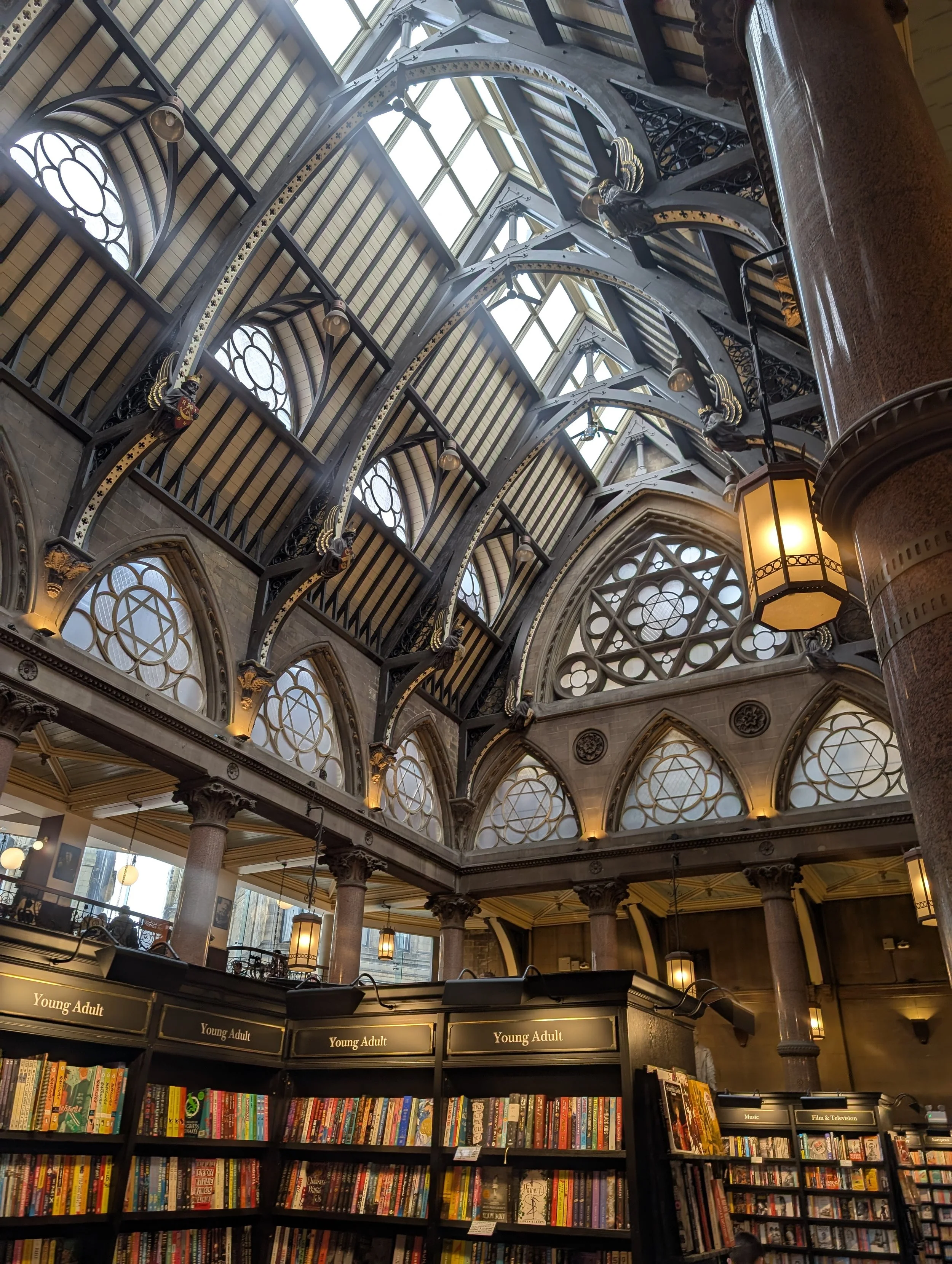
The Wool Exchange as a bookshop, Bradford
This linked to a recent conversation I had with colleagues about the Wetherspoon model. There are over 800 ‘Spoons’ pubs in the UK, many in heritage buildings, serving cheap pints and affordable grub to a target customer.
So, there are clearly different approaches and models of heritage asset commercialisation.
Motive and ownership matter, and I’ll come back to that. But these examples neatly prompt the question: is overt commercial use of heritage buildings a blight and a wickedness, or a pragmatic and sustainable way to generate the ongoing revenue needed to preserve loved and valued historic fabric?
And a secondary question: why are some operators deemed more palatable and trusted in this space than others?
Why commercial use matters
On the first question, we can’t ignore the reality that the heritage sector is under strain. Umpteen reports have highlighted accelerated heritage loss from new development and neglect, compounded by a lack of viable financial models.
It’s challenging to make heritage pay, particularly for small and medium propositions built around inflexible, niche visitor models, where significant upfront capital is needed at risk and ongoing operations are complex.
As I covered in this article, heritage strategies and plans increasingly prioritise the wider benefit that heritage creates (in addition to non-use value), which makes it feel necessary for historic structures to be used and useful. A building that is well used is more likely to be preserved and cared for than one that is shuttered and facing the wrath of pigeon attacks and roof-sprouting Buddleja (why is it always Buddleja?).
There’s also the broader benefit that re-woven places bring. They can quickly become anchors on the high street, supporting economic growth, community and wider place-making. There are loads of examples on the inspiration map of this being done well across the housing, commercial, community, visitor and amenity sectors.
Why do operators get judged differently?
This is more complex, but I think it breaks down into three points.
Design. Is the heritage fabric respected? Are designs aligned to the relevant listings and policies? Are changes reversible?
Operation. Is the place open and accessible to all? Is it well used? Is it being well looked after?
Added impact. Does the commercial use provide additional value? Is it aligned to local community needs? Does it benefit underrepresented groups who don’t usually benefit from heritage?
So, the thing is, if you broadly agree with the interrogating questions above then I’d argue that most Weatherspoon’s (and indeed the Domino example) would answer positively to many of the points raised. So, why isn’t Weatherspoon’s being held up as the saviour and model solution to high street heritage re-use?
The fourth test: taste
I think I need to add a fourth consideration, which I can best describe as ‘taste’.
‘Spoons has a distinctive ‘value’ vibe. The décor and fruit machines are viewed by some as tacky. The food is affordable (artisan organic nowhere to be seen). It can be noisy and sticky on a Friday night in August. It can be noisy and sticky on a Saturday night in February. The owner’s politics, business model and ethics are questioned by some.
And yes, the brand and environment probably do create barriers. I know people who refuse to go into a Wetherspoon’s. Conversely, my dad, on a state pension, regularly went to his local for a cheap pint of Guinness on a Friday. In doing so, he sat in a 500-year-old well maintained building with original features and local history artefacts and interpretation dotted around the pub.
If the vibe was ‘posher’ and and there was expensive craft stout on tap I don’t think my dad would have gone, instead he’d stay home alone.
Before I’m accused of being patronising: I come from a low-income, one-parent family, growing up in the 80s relying on benefits, and I’d definitely have been taken to a Wetherspoon’s if they’d existed then. Admittedly, I’m now proper middle ‘sourdough’ class, living in a leafy Wiltshire market town. But my experience as a child, with little exposure to or benefit from heritage because of limited means and opportunity to access, makes me ponder whether any heritage exposure is good exposure?
So what?
For the avoidance of doubt, I’m not saying the mass commercialisation of heritage assets to sell cheap alcohol and ultra processed food is the answer. But perhaps, as a sector, we could be a little less snobby and relax our taste threshold for pragmatic wins where, in particular, underserved audiences benefit and heritage is protected?
